

‘Coronavirus will be with us for a long time, remains extremely dangerous,’ says WHO Chief
The statement from the WHO-Chief above certainly makes me wonder what next. These are uncertain times and it is here to stay, the pandemic has created a catastrophic situation sparing none. It’s not just impacting human life but also the livelihood. Today when the world has witnessed over 4 million cases and about 3 Lakh casualties, the situation continues to stay grim with no sign of a vaccine by the end of 2020.
These are unprecedented times with just one recourse i.e. maintaining social distancing and staying safe. However, this has not spared the businesses & corporates. A lockdown spanning over 45 days now along with vacillating future has made the business workings go haywire.Leading to an acute shortage of funds at hand and in rotation to operate. While the businesses across have been trying to manage their fixed expenses but it is subject to several conditional arrangements.
A no show situation has created a domino effect breaking the back of the eco-system. Where the chain of nonavailability of funds, has impacted the pyramid from the top right to the bottom. And for the times ahead a wavering customer behavior is expected to make the matter worse.
No cashflow sitch is near death for any business and with the current banking structure, the banks have been overtly cautious sanctioning OD’s, Loans, or other credits. Thus a vicious cycle for any enterprise with no revenue generation and no re-deployment. The recourse for the path ahead is simple. Holdforth and conserve as much as possible.
Let’s understand how businesses look to tread the circuit with little or no money. We must identify the variable expenses which are divided primarily into five broad categories;
- Cost of Goods
- Manpower Cost
- Statutory expenses
- Other Variable Costs
- Marketing Expenses
All the buckets are directly proportional to the revenue. With a loss of opportunity to sell for a quarter of a year the inventory would mean that the working capital gets held up and thus no fresh produce may be needed until the stock at hand is liquidated. This thumb rule is applicable across industries including Fashion. A lockdown nearly meant a time freeze thus there is no change in the trend.
Manpower costs constitute a sizeable component in any set-up and thus have called for immediate attention particularly for organizations with limited reserves. We have been reading of pay cuts ranging from 20% – 50%. There have been sectors like travel & hospitality who have taken drastic steps like leave without pay for their employees until further notice and if things continue to get worse. Lay-offs would be inevitable. (https://www.outlookindia.com/magazine/story/business-news-100-million-and-more-indian-jobs-are-at-risk-after-covid-19-lockdown-is-your-job-safe/303094)
While the government has announced a moratorium of EMI’s however the effectiveness of the announcement is yet to be realized. The moratorium is subject to approvals from the banks. Also, the provisions allow only a deferment of the payouts with an applicable rate of interest. This largely means building up a liability. There have been some concessions on filing returns, insurance renewals (Vehicles) and a couple more however they are far too few in nature.
Variable/Other costs are differentiated depending on the exigencies. Expenses such as rents are being negotiated by the business enterprises from a near waiver to a reduction until march of 2021 is being tabled. Most other expenses are directly proportional to operations such as electricity, phone bills, etc. COVID has also called for an additional measure of checks and thus it is imperative for organizations to undertake initiatives of hygiene checks and safety drills to ensure that the work environment remains a safe place to work, which in turn are to be factored afresh.
Marketing is directly dependent on revenues however in a normal scenario, while they are linked but it can be classified into two groups;
Brand Lead Marketing & Sales Lead Marketing The proportions of expense split between the two groups vary on the stage of business and brand categories.
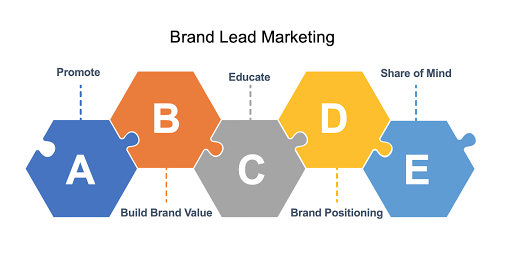
The brand lead marketing focuses on the 5 Key attributes which most companies focus through their campaigns in order to meet their business plan. Whereas, a sales lead model has just one motto.

While the proportions for brand lead to a sales lead marketing for the financial year will flip to see a focus on the later. We would surely see organizations planning/scheduling expenses in the below module;
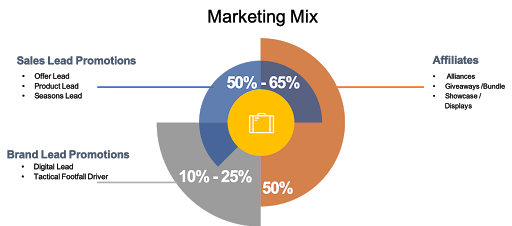
With the consumers having limited access to funds most of the purchases would be a need / necessity-based buying. Thus it becomes imperative for companies to stay focussed on their targeted marketing approach. “THE NOT SO NORMAL APPROACH”
- Normal Supplementary: Limited access to funds will lead to an alternate mindset/change in consumer behavior (he/she would not be willing to forgive easily), thus the chances of errors are marginalized. Thus Bundling would help more or a showcase to give more would be needed.
- The Normalcy of Whims: Impulse lead buying would cease to exists and move towards need base, thereby calling to the onus on companies/marketer to entice through differentiation (It could be a mix of Offer, Product, Service & Appeasements)
- The Normal Behind the Mask: The idea to look good is through a representation of a better looking/well-groomed/well-dressed personality. Psychologically a person behind the mask feels partially visible thus the thought of looking good by dressing well may get impacted leading to a change in buying behavior, i.e. buying the latest fashion. The fashion retailers could look beyond the functional masks.
- The Normal beyond of Cupidity: The lockdown has provided individuals ample time to introspect and thus a thought ‘How much is good’, a continuous buying/shopping has turned the society into a hoarder. This would allow people to recycle or pull out and use pieces from their wardrobes which have been used rarely. This may impact the buying behavior as the thought why should I buy when I already have it. This can be addressed by brands through a showcase of differentiated & creative design, thereby driving a strong urge to buy.
Most businesses are looking to write off the FY 2020-21 and so will the investors/shareholders, realistically for fashion retail the expected numbers are down by 40% – 50% against the FY 2019-20. Therefore a derivation of an expected budget for marketing could be;
Marketing Budgets in a Normal Year of business: 4% – 5% of Revenues Revenue: AMarketing Budget: 0.04A
2020-21: 0.5A* 4%With Budget Slash @ 50% : 0.5A * 0.02
The expected marketing budgets could be brought down by 75%.
The unprecedented times call for unprecedented measures with the budgets brought down to 25%, marketers need to put in 4X the effort to build in The Normal pyramid to strike into achieving the desired goal. The crisis has made us think, re-think how we have been doing things, and the course correction that would be needed.
2020 can be factored as a year of learning, correct loopholes/leakages in the business model, identify lacunas ensuring that the unit economics are altered to the optimum. It is to prepare for eternity so that in times ahead we can stare into the eye of the storm and say it aloud. “Bring it on, we have lived through 2020″.- Nishant Poddar
_X_
 Narratives By Nishant Poddar